How Botox Actually Works: A Straightforward Guide for Slidell Patients
Botox is one of the most requested treatments in medical aesthetics and also one of the most misunderstood. People know it smooths wrinkles. They've seen the before and afters. But ask most patients how it actually works and you get a vague answer about "freezing" the face, which isn't quite right and is probably responsible for a lot of unnecessary hesitation.
Here's the plain-language version. No jargon, no oversimplification, just what Botox actually does, how units work, what different areas need, and what realistic results look like.
What Botox Actually Is
Botox is the brand name for botulinum toxin type A, a purified protein used in extremely small, precisely targeted doses. It's been studied and used clinically for decades and has one of the longest safety records of any injectable treatment available.
Botox isn't the only brand. Dysport, Xeomin, and Jeuveau are all botulinum toxin type A injectables that work the same way with slightly different formulations.
At Infinite Med Spa in Slidell, we'll talk through which option makes the most sense for your treatment at your consultation.
What Happens When Botox Is Injected
Your facial expressions are controlled by muscles. Those muscles contract every time you squint, frown, raise your eyebrows, or smile, and over time those repeated contractions crease the skin above them. That's how dynamic wrinkles form. They're the physical imprint of years of facial movement.
Botox works by temporarily blocking the signal between the nerve and the muscle. When that signal is interrupted, the muscle can't fully contract. The skin above it relaxes and the crease softens or disappears. It's not paralysis in the dramatic sense.
It's not paralysis in the dramatic sense. It's a controlled, localized reduction in muscle activity in a specific area. Done correctly, the muscles that control your natural expression remain largely unaffected. The ones causing the wrinkles you don't want are the ones that relax.
That's the difference between Botox that looks natural and Botox that doesn't. The result comes down to where it's placed, how much is used, and whether the injector understands facial anatomy well enough to hit the right muscles without affecting the surrounding ones. For more on what natural Botox results actually look like, read our best Botox in Slidell guide.
How Botox Units Work
Botox is measured and priced in units. A unit is a standardized measure of the active protein, and the number of units needed for a treatment area depends on the size and strength of the muscle being treated, not just the size of the wrinkle above it.
Stronger muscles, typically those in people who are younger, more expressive, or who have more muscle mass, generally need more units to achieve the same level of relaxation as a smaller or weaker muscle. This is why two people getting Botox in the same area can need significantly different amounts and still get equally natural results.
At Infinite Med Spa in Slidell, all Botox is priced per unit. Dosing is always assessed at your consultation based on your specific anatomy, your muscle strength, and the look you're going for, not a flat per-area fee that ignores all of those variables.
What Different Areas Actually Need
This is where generic Botox guides fall short. Different areas of the face have different muscles, different movement patterns, and very different consequences if the dosing is off. Here's what each common treatment area actually involves.
Forehead lines:
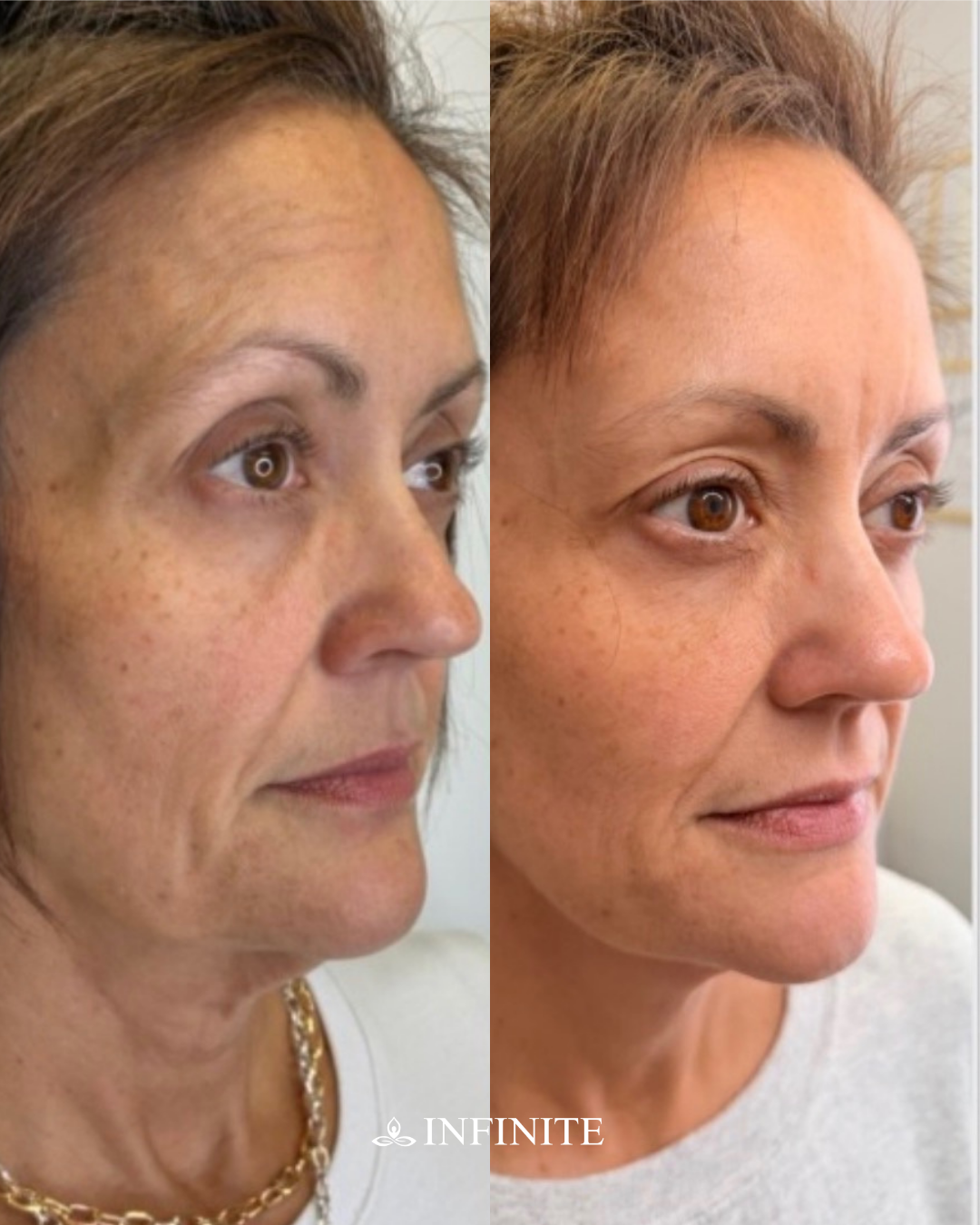
The forehead is controlled by the frontalis muscle, which runs across the entire forehead and is responsible for raising the eyebrows. Most patients need between 10 and 20 units here, but this area requires real precision. Too much Botox in the frontalis and the brows drop, creating a heavy, low-brow look. Too little and the lines don't fully soften. The goal is relaxing the muscle enough to smooth the lines while preserving enough movement to lift the brow naturally.
The 11s (glabellar lines)
The vertical lines between the brows are caused by the corrugator and procerus muscles, which contract when you frown, concentrate, or squint. These are typically strong muscles and usually need between 20 and 30 units for adequate relaxation. The 11s are often the area that bothers patients most and also one of the areas where Botox is most effective, since these muscles have a relatively defined action and respond well to targeted treatment.
Crow's feet
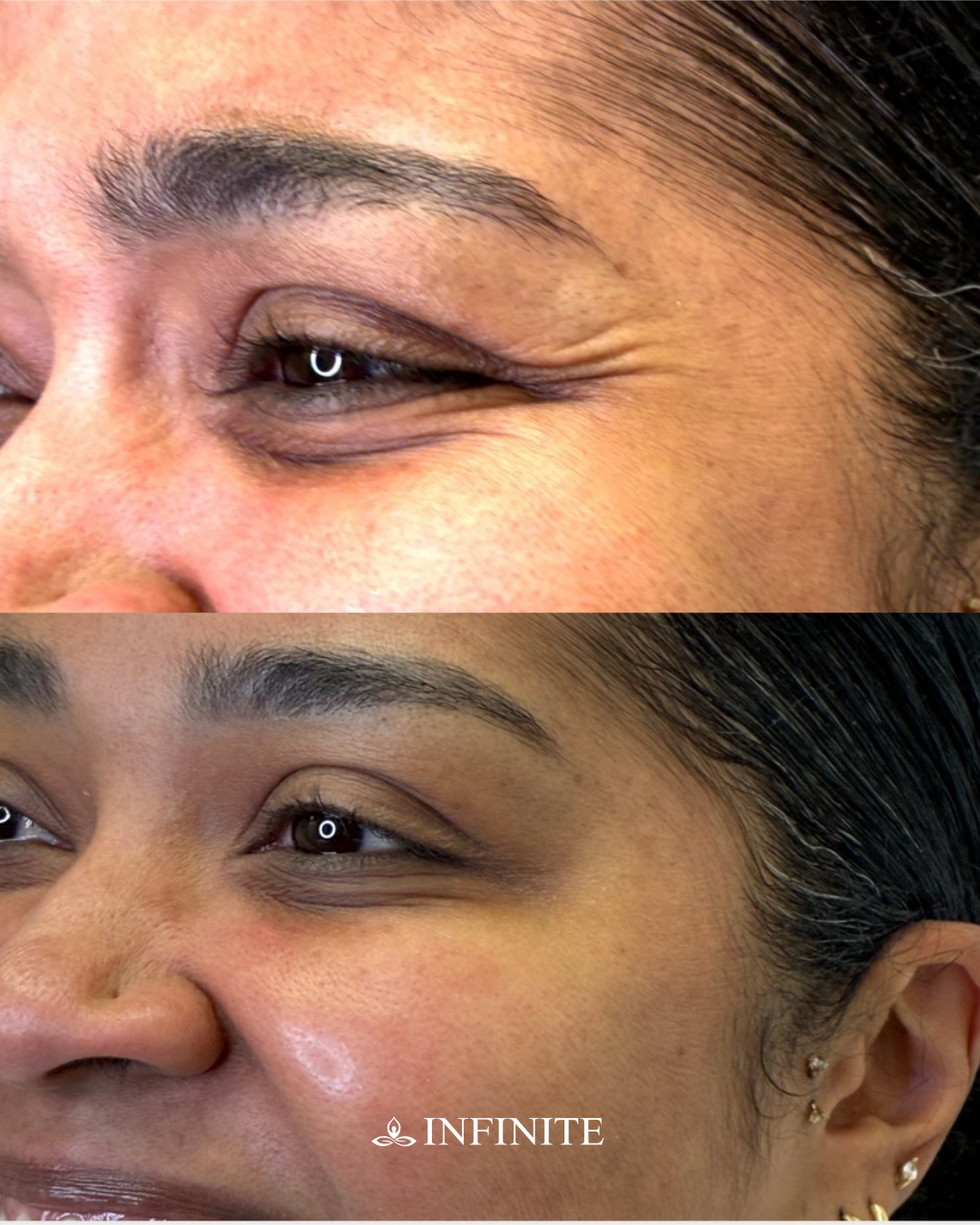
The lines at the outer corners of the eyes are caused by the orbicularis oculi, the muscle that encircles the eye and is responsible for squinting and closing the eye. Most patients need 10 to 15 units per side. This area tends to respond beautifully to Botox and is one of the more universally flattering treatments because softening crow's feet tends to make the whole eye area look more open and rested without affecting natural expression.
Mentalis and DAO
These are two of the more nuanced treatment areas and ones that make a significant difference in overall facial balance when addressed correctly.
The mentalis is the muscle that controls chin movement and is responsible for the dimpled or puckered chin texture that many patients dislike. A small amount of Botox, typically 4 to 6 units, relaxes this muscle and smooths the chin surface noticeably.
The DAO, or depressor anguli oris, is the muscle that pulls the corners of the mouth downward. When it's overactive, it creates a subtle but persistent downturned expression that can make someone look unhappy or stern even when they're not. A few units placed carefully here lifts the corners of the mouth slightly and restores a more neutral, rested expression. It's a small treatment with a meaningful impact on how the face reads at rest.
Lip flip
A small amount of Botox placed along the upper lip relaxes the muscle just enough to let the lip roll slightly outward, creating the appearance of a fuller upper lip without adding volume. It's not the same as filler and doesn't add projection, but for patients who feel their upper lip disappears when they smile, a lip flip is a subtle and effective option. Usually 4 to 6 units. For patients interested in adding actual volume alongside a lip flip, read our dermal filler guide to understand how the two treatments work together.
What Realistic Results Look Like
Botox takes three to five days to begin working and reaches its full effect at around two weeks. Most patients see gradual softening over that window rather than an immediate change.
Done well, results look like you, just more rested. Lines soften, the face relaxes, and movement is preserved in the areas that matter. The goal is never a frozen or expressionless result. That's almost always a dosing issue, not an inevitable side effect of the treatment itself.
Results typically last three to four months, though this varies. Patients who are newer to Botox sometimes find it metabolizes faster initially. With consistent treatment over time, many patients find their results last longer as the treated muscles gradually weaken from reduced use.
How Dosing Affects Natural Movement
This is the piece most patients don't hear enough about before their first appointment.
Underdosing Botox preserves movement but may not adequately soften the lines. Overdosing eliminates movement but can create the flat, expressionless look that makes people nervous about the treatment in the first place. The right dose is the one that relaxes the muscle enough to address the concern while leaving enough residual movement to keep expressions natural.
That calibration is different for every patient and changes over time as the muscles respond to repeated treatment. It's also why the conversation at your consultation matters. At Infinite Med Spa, we ask about your goals, look at how your muscles move, and dose based on what we actually see, not a standard formula applied to every face.
For patients newer to Botox, we often recommend starting conservatively and adjusting at a follow-up if needed. It's much easier to add a few units than to wait out an overdose. You can read more about what to expect going into your first appointment in our original Botox overview post.
Botox vs. Filler: Knowing Which One You Actually Need
Botox treats dynamic wrinkles caused by muscle movement. It doesn't add volume and it doesn't treat lines that are visible at rest when the face isn't moving.
Static wrinkles, hollowing, and volume loss respond better to dermal filler. Many patients benefit from both, with Botox handling the movement-related lines and filler addressing the structural changes that come with aging. You can read more about whether filler might be right for you in our dermal filler candidacy guide.
For patients interested in improving overall skin quality alongside their injectable treatments, microneedling and chemical peels address texture, tone, and collagen loss in a way that injectables alone don't. Our microneedling vs. other treatments guide is a good place to start if you're weighing your options.
What to Expect at Your Botox Consultation at Infinite Med Spa
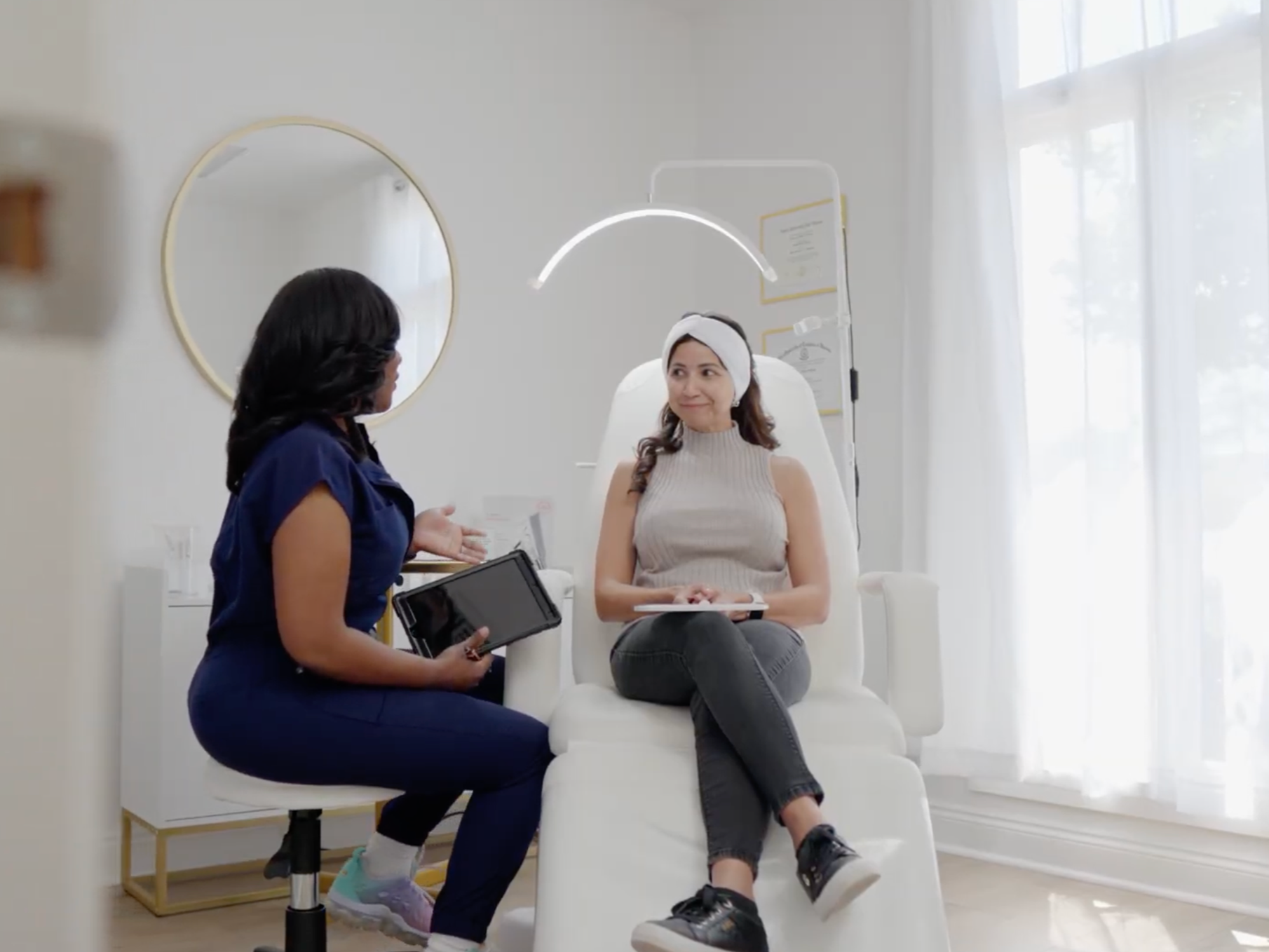
Your consultation is where we look at your specific anatomy, talk through what's bothering you, and build a treatment plan that makes sense for your face and your goals.
We'll assess your muscle strength and movement, discuss realistic outcomes for the areas you're interested in, and walk you through unit estimates and pricing before anything is scheduled. There's no pressure to book on the spot, and we'll always tell you honestly if we think something else would serve you better.
If you're also curious about skin concerns like acne, pigmentation, or texture alongside your Botox treatment, our Aerolase laser and facials are treatments worth asking about at your consultation. And if you're not sure where to start at all, our Your Needs page matches your specific concerns to the treatments we offer.
Ready to Book Your Botox Consultation in Slidell, LA?
Understanding how Botox works makes it a lot easier to walk into a consultation with the right questions and realistic expectations. At Infinite Med Spa, we'll take the time to actually answer those questions and build a plan around what you want to see, not a generic protocol.
Call or text (985) 645 6193 or send us a DM to book or visit our booking portal here.
Initial consultation required. Results vary and treatment plans are personalized.
Infinite Med Spa | 370 Gateway Dr Suite B, Slidell, LA 70461